

Direct Investigation
Direct Confirmation Below Ground
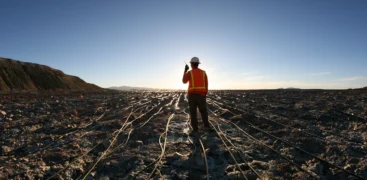
Direct investigation involves methods that physically or visually confirm subsurface utilities and features. These services provide a higher level of confidence than records alone by relying on direct observation, exposure, and survey-grade documentation.
Direct Investigation
When Records Are Not Enough
Utility records and surface locating provide valuable context but may not fully represent subsurface conditions. Direct investigation addresses uncertainty where higher confidence is required for planning, construction, or coordination in complex or congested environments.
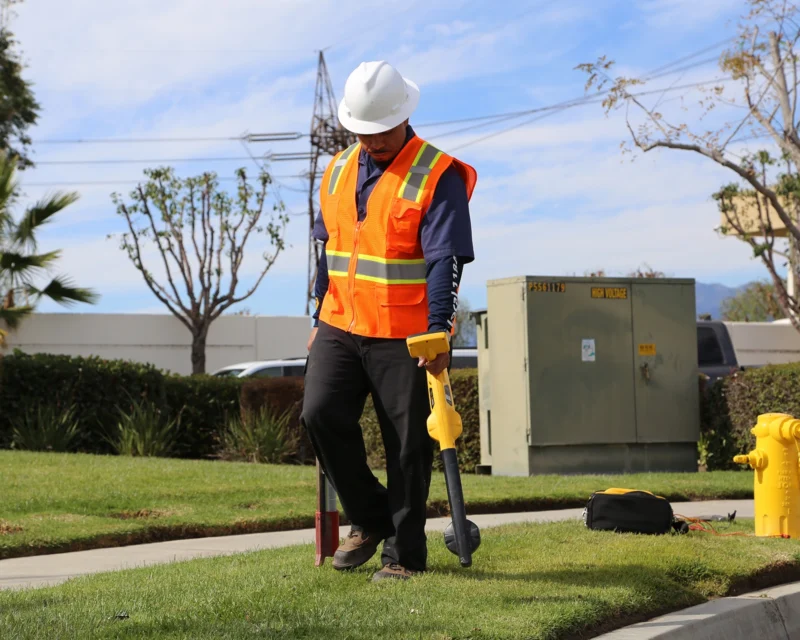
Direct investigation builds on locating by adding visual inspection, targeted exposure, and documented verification. Methods are selected based on access and site conditions, emphasizing repeatable field execution. Deliverables include confirmed utility information, inspection records, exposure documentation, and survey-grade mapping to support planning and coordination where subsurface accuracy matters.
Direct Investigation
Field Verification Approaches
Direct investigation uses methods that rely on physical access, visual confirmation, or survey-grade documentation to validate subsurface conditions. These approaches provide a higher level of confidence than records or surface detection alone.
CCTV Inspection
Remote camera inspection provides visual confirmation of internal pipe conditions and connectivity.
Sonde Locating
Locatable transmitters inserted into conduits allow direct tracing of underground pathways.
Direct Investigation
Direct Investigation Questions
Learn more about key considerations for using direct methods to verify utility information.
Direct investigation confirms utilities through observation or exposure, rather than surface detection alone.
No. It is typically used when higher confidence is needed due to risk, complexity, or project requirements.
No. Services focus on verification and documentation, not engineering analysis or design.
Yes. Outputs can be incorporated into maps, reports, and digital models when requested.
Confirm Subsurface Conditions
Direct investigation provides field-verified confirmation where surface-based methods are not enough. Visual inspection, targeted exposure, and documented findings support coordination, planning, and confident decision-making when subsurface accuracy matters most.