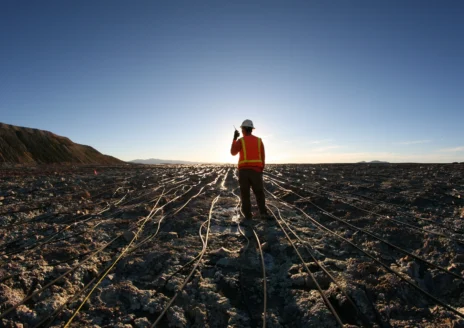

Certerra Subsurface Liner Leak Location – Pinpointing industrial pond liner leaks
News2 Mar 2026
Field reconnaissance metallurgical monitoring with our mobile geochemical laboratory trailer deploys on-site for both in-situ field reconnaissance and ex-situ detailed tests of ore or solution samples. The mobile lab provides real-time presentation capabilities and gives statistical information about changes occurring within a leach pad.
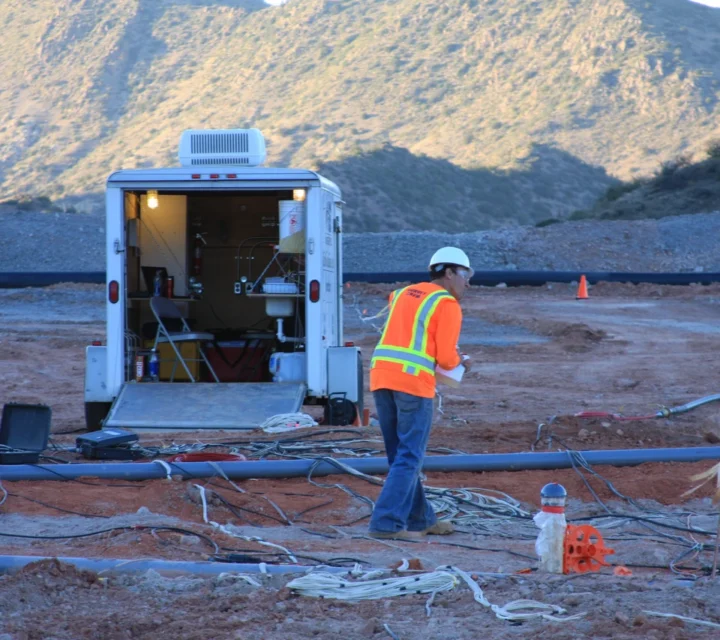
For heap injection projects, our system monitors pressure, flow, and temperature inside the leach pad. We also acquire geochemical data of extracted solutions from wells and seeps using bench-top meters, colorimetric testing and titration, enabling assessment of internal conditions without full-lab analysis.
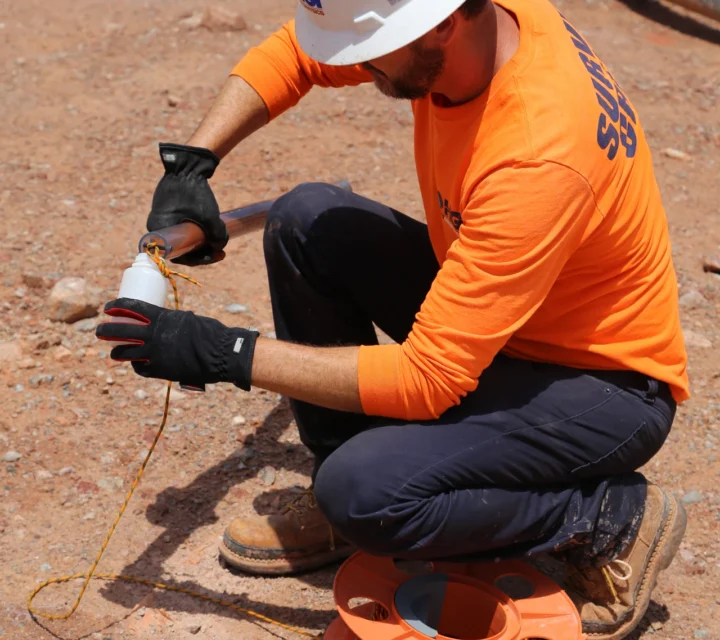
Many systems lack meaningful data on internal hydraulic performance and geomechanical changes. Our monitoring capabilities reveal what is happening inside a pile when highly pressurized solution is injected, helping you optimize the process by providing data needed to interpret internal behavior and adjust operations accordingly.
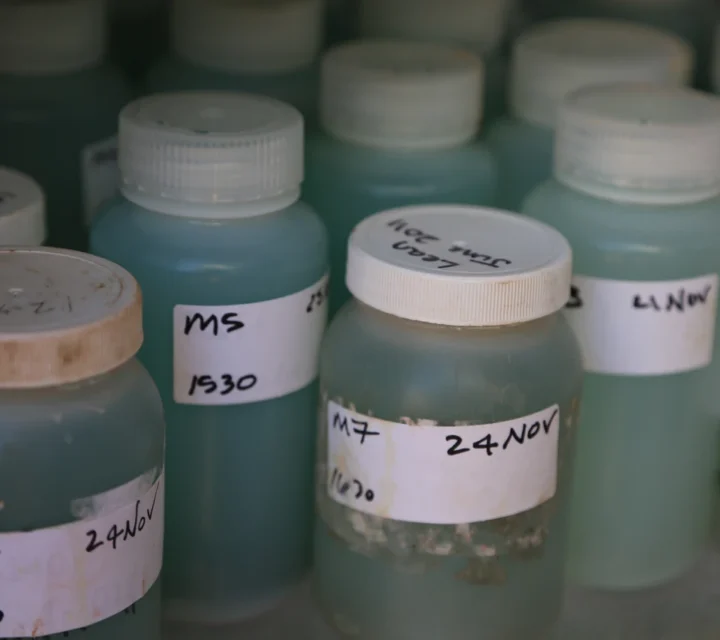
Our clients gain on-the-spot analysis with a rapid sample turnaround, providing statistical information on system changes. Real-time monitoring and internal condition data equip clients with key variables and a clearer view of what is happening–enabling optimization.
We use multiple complementary technologies for detailed subsurface characterization. Each method contributes unique measurements that, when integrated, improve interpretation of internal conditions, highlight geochemical and hydraulic changes, and strengthen decision-making through more complete understanding of your heap leach system behavior.
Temperature can be measured using a variety of tools, from handheld thermometers, buried thermistors, thermocouples, or fiber optic distributed temperature sensing (DTS)
There are many different types of meters that can quickly measure for pH, oxidation-reduction potential, conductivity, etc.
Pressure transducers can keep track of water levels inside monitoring wells to ensure the hydraulic head is not too high during injection and that the heap can drain when injection ceases.
Get the facts about metallurgical monitoring—what it measures, how it supports operational insight, and why understanding internal system behavior is essential for improving performance, reducing uncertainty, and supporting informed decision-making.
Metallurgical monitoring provides real-time information on internal conditions, enabling teams to recognize trends, detect deviations, and build confidence in how a system is responding over time.
By providing timely and statistically meaningful data, metallurgical monitoring gives operators the insight needed to adjust strategies and optimize outcomes.
Metallurgical monitoring provides measurable internal-condition data that refine models, guide planning decisions, and validate assumptions used in ongoing operational management.
Clients receive actionable insights, clearer understanding of subsurface conditions, and rapid access to data that support improved performance and confidence in operational decisions.
Material behavior can change over time and with operating conditions. Metallurgical monitoring provides field-verified insight into subsurface and process-related conditions to support performance tracking, planning, and informed decision-making.
Loading...