Certerra Subsurface Liner Leak Location – Pinpointing industrial pond liner leaks
News2 Mar 2026
Groundwater is a vital water resource for communities and industries. Sustainable access depends on understanding where it’s stored, how it moves, and how geology affects availability and quality. Certerra integrates geologic and hydrogeologic data with non-invasive, surface-based geophysical measurements to reveal subsurface conditions and identify promising zones for reliable, long-term water supply.
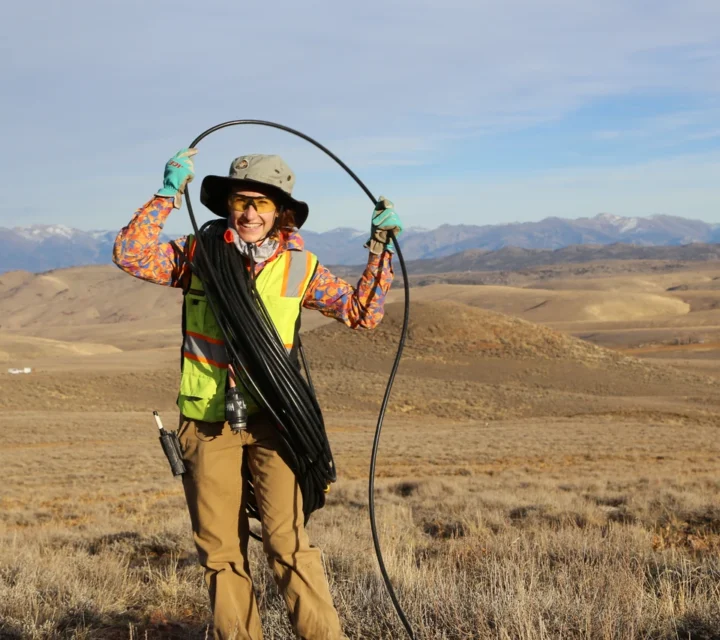
Certerra evaluates groundwater by combining geologic context with noninvasive, surface-based measurements that sense contrasts related to saturation, density, composition, and structure. These property contrasts are modeled to delineate basin geometry, estimate storage, and reveal boundaries between unconsolidated sediments and bedrock. Structural features—such as fractures, faults, and lineations—are identified from contour offsets and significant changes in subsurface properties.
In karst, where heterogeneity and voids dominate, surface data highlight conduits, cavities, and epikarst features that control rapid flow and contaminant transport. Along coasts, repeated (time-lapse) surveys track freshwater–saltwater interfaces and intrusion dynamics.
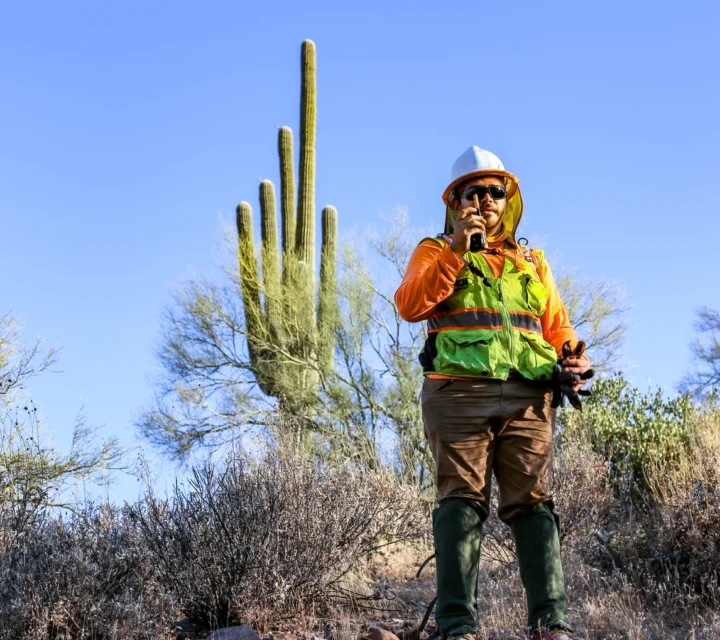
Groundwater surveys reduce uncertainty where surface information is limited. Our approach helps you: delineate basin boundaries to estimate available volume; identify subsurface structures that channel or impede flow; characterize complex karst systems where voids and conduits dominate; and clarify groundwater/surface-water interactions.
In coastal regions, it distinguishes freshwater from saline zones and tracks intrusion or mixing over time. It also supports identifying infiltration areas, preferential pathways, and potential transport routes for contaminants (including acid rock drainage), issues that are difficult to resolve with sparse point sampling alone.
By revealing storage, connectivity, and barriers, investigations reduce the risk, improve the efficiency of targeted drilling or monitoring, and provide inputs for groundwater models.
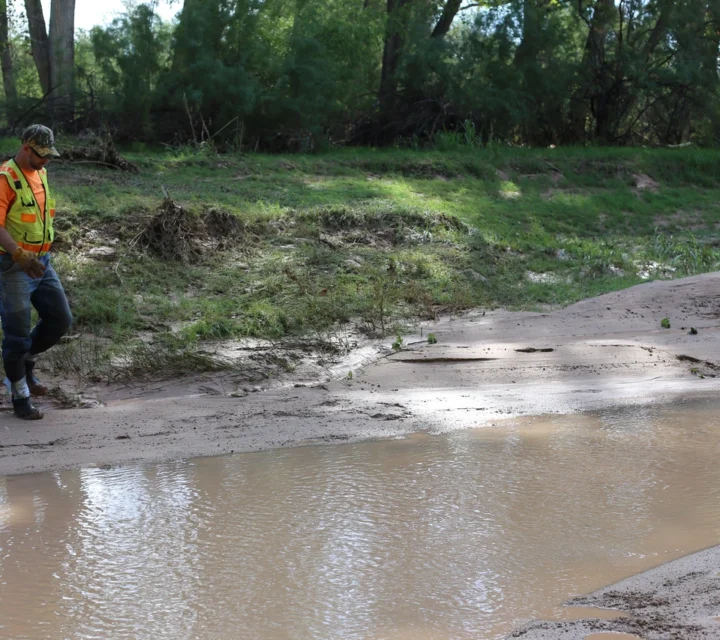
You receive detailed interpretations showing depth to bedrock, basin geometry, and saturated sediment distribution; fractures, conduits, and infiltration zones; and map freshwater–saltwater interfaces and their change through time. These products help you prioritize targets, focus drilling or sampling, and provide the spatial context that isolated point measurements cannot capture.
The outcome is a coherent subsurface picture: maps, sections, and models that support resource estimation, protection of existing supplies, early risk detection, and adaptive management. With reduced uncertainty and stronger geologic foundation, your team can plan wells and monitoring networks more effectively, optimize remediation strategies, and enhance groundwater flow models with realistic aquifer geometry, connectivity, and parameter contrasts.
Groundwater exploration services identify new subsurface water sources by mapping geology, structure, and saturation to locate productive aquifers and support sustainable water supply development.
Basin delineation defines the boundaries, geometry, and depth of groundwater basins to estimate storage, understand flow patterns, and support sustainable water resource management and planning.
Fracture mapping identifies subsurface cracks, faults, and lineations that influence groundwater flow, stability, and contaminant transport, providing critical insight into subsurface connectivity and structure.
Karst investigation characterizes sinkholes, conduits, and cavities in soluble rock to understand groundwater flow, storage, and geohazards within complex, highly variable subsurface systems.
Salt water intrusion studies map and monitor the movement of saline groundwater into freshwater aquifers, helping manage coastal resources and protect water quality from contamination.
Electrical resistivity measures variations in subsurface electrical properties to reveal differences in material composition.
Magnetotellurics measures natural electromagnetic fields to determine variations in subsurface electrical properties and structure.
Learn about groundwater exploration, why it matters, how surface-based subsurface investigations work, and how integrated data clarifies storage, flow pathways, and risks to support sustainable water resource planning and protection.
Dilling provides valuable point data but can miss critical features; surface measurements provide continuous spatial context to guide targeted drilling and monitoring.
Yes. Geometry, boundaries, and property contrasts provide defensible inputs that improve model realism and predictive value.
You receive detailed maps, cross-sections, and interpretations that prioritize targets, reduce uncertainty, and inform long-term groundwater management.
Surface measurements sense property contrasts tied to saturation, composition, and structure, which are modeled to map storage, boundaries, and pathways.
Understanding subsurface conditions is critical to groundwater exploration. Geophysical investigation provides field-verified insight into subsurface features that support exploration planning, site evaluation, and informed groundwater-related decisions.
Loading...