Certerra Subsurface Liner Leak Location – Pinpointing industrial pond liner leaks
News2 Mar 2026
Direct push methods advance tools into the subsurface using static force, percussion, or vibration without continuous rotation. They are commonly used for shallow environmental investigations, supporting soil sampling, temporary groundwater sampling, and sensor installation with minimal disturbance.
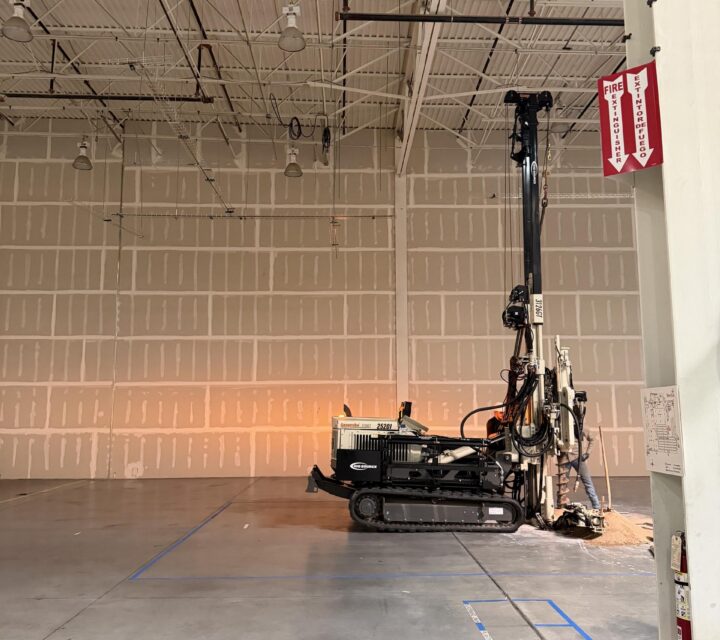
Direct push systems use hydraulic pressure, percussion hammers, or vibratory force to advance rods and tooling into unconsolidated soils. Unlike rotary methods, material is displaced rather than removed as cuttings. Specialized tools allow for discrete soil sampling, temporary groundwater sampling, and in situ measurements during advancement. Depth capability depends on soil density, lithology, and available push force, and refusal commonly occurs in dense gravel, cobbles, or cemented layers. Because no drilling fluids are required, direct push methods are often selected where minimal waste generation and rapid site access are priorities.
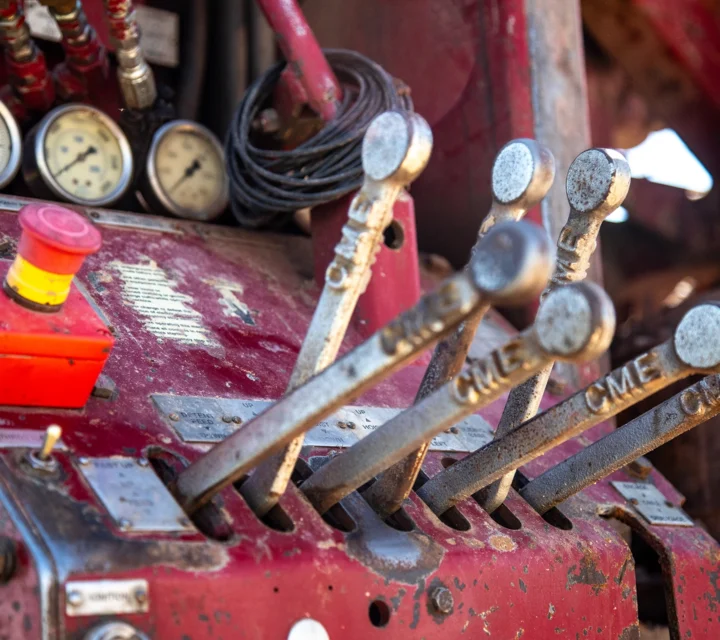
Direct push methods are widely used for shallow environmental site characterization, including soil sampling, temporary groundwater sampling, and installation of small-diameter monitoring points or sensors. They are commonly applied where access is limited, turnaround time is critical, and subsurface conditions are predominantly unconsolidated.
Learn more about how direct push methods work, when they are appropriate, and factors that influence performance and refusal during shallow subsurface access and sampling.
Direct push methods are primarily used for shallow subsurface access in environmental investigations, supporting soil sampling, temporary groundwater sampling, and limited installation activities without generating drill cuttings.
Direct push advances tooling by force rather than rotation and does not continuously remove material, resulting in minimal waste. Rotary drilling removes cuttings and typically supports greater depths and harder formations.
Depth is limited by formation resistance and available push force. Dense sands, gravel, cobbles, or cemented layers commonly cause refusal and may require transitioning to other drilling methods.
No. Direct push methods generally do not require drilling fluids, which reduces waste handling and simplifies site logistics compared to fluid-based drilling techniques.
Direct push methods allow efficient subsurface access with minimal disturbance. Field-executed direct push services support sampling, investigation, and monitoring efforts with clear documentation to inform planning and next steps.
Loading...