
Certerra Subsurface Liner Leak Location – Pinpointing industrial pond liner leaks
News2 Mar 2026
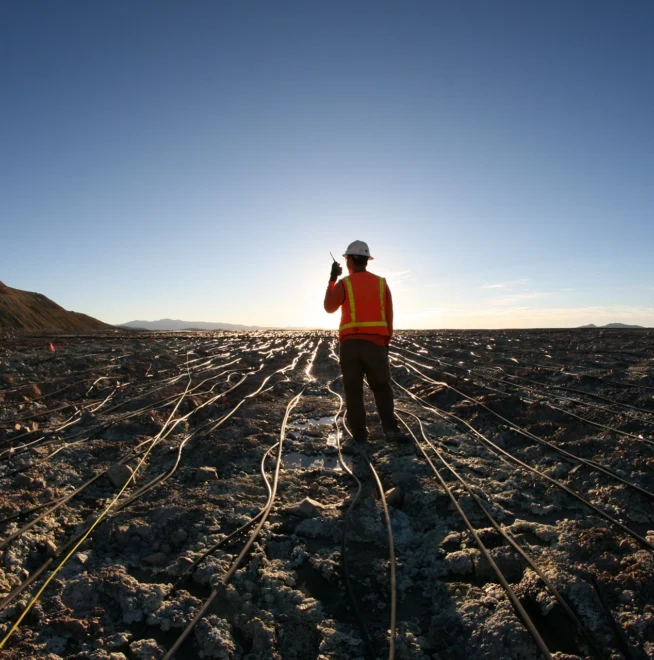
Solutions For A Complex World:
In the world of industrial open pit metal mining, heap leach pads are a mine site’s most valuable asset. These assets need to be maintained and monitored to continue producing throughout their lifecycle. However, not all heap leach pads are equal, and adverse hydraulic conditions can arise during operation, resulting in lower production that leaves valuable inventory behind.
Meeting life-of-mine challenges is essential in today’s mine planning. Adding enhanced recovery metal extraction technology can extend a mine’s lifecycle, especially as traditional extraction methods become constrained by uncontrollable factors in the leaching process. Surface leaching is effective and successful for initial metal recovery, but over time it can become an ineffective tool for removing the remaining inventory.
In recent years, enhanced recovery, coupled with a geophysically and metallurgically based monitoring program, has proven beneficial in extracting the last bit of metals from heap leach pads. The technology is used in two ways.
First, the internal structure of the pad is characterized using electrical resistivity tomography (ERT). This process is performed because stacking methods, ore properties, and adverse hydraulic conditions can create under-leached areas by constraining leachate flow to smaller flow zones during the traditional leaching process. These under-leached regions of the subsurface pad are typically drier and may contain significant quantities of metal. ERT can distinguish between subsurface wet and dry areas because they have different electrical properties. Wetter areas are more conductive, while dry areas are more resistive.
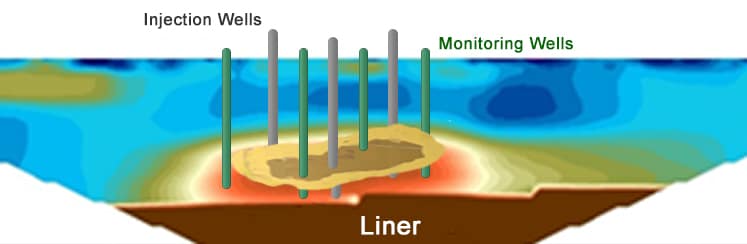
Second, dry areas of the leach pad are targeted for injection. Once the subsurface has been characterized and regions of interest, or suspected mineral sources, have been mapped, targets are drilled and injection wells are installed.
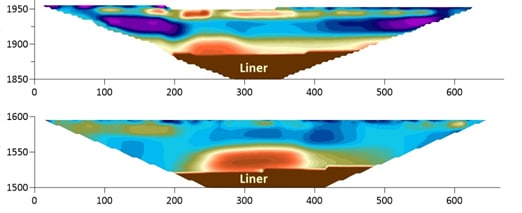
Certerra Subsurface Imaging designs injection wells and wellfields to suit the specific heap environment. We use geophysically monitored injection techniques to surgically target the remaining ore, liberating the metal through focused wellfield design. Each well can target leaching at specific depths, and multiple injection wells coupled with geophysical monitoring help optimize lateral spread and make sure the complete area is leached.
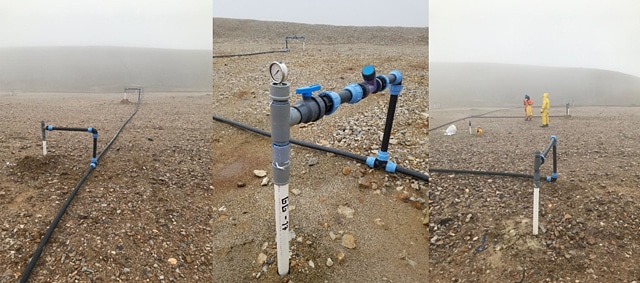
Additionally, Certerra Subsurface Imaging works within heap constraints to optimize the secondary mineral recovery process using piezometers, monitoring wells, and full sampling programs. By altering injection flow rates, cycling flow between wells, and monitoring heap chemistry, Certerra Subsurface Imaging can deliver an optimal solution for most heap leach pads. Certerra Subsurface Imaging has nearly a decade of experience optimizing injection variables for these enhanced recovery projects.
Extending the life of a heap leach pad improves mine sustainability for all stakeholders, from community members to employees and business partners. Enhanced recovery can extend the life of a heap leach pad by years and, in some cases, even decades. Certerra Subsurface Imaging has experience across many types of metal mines, including gold, silver, and copper operations in many parts of the world, providing injection monitoring solutions to mines.
Certerra Subsurface Imaging is a world leader in applying, monitoring, and understanding the science of enhanced metal recovery on heap leach pads. Contact us for a free consultation on how injections could benefit your heap leach project and extend the life of your mine. We’re always happy to chat.
Loading...