Certerra Subsurface Liner Leak Location – Pinpointing industrial pond liner leaks
News2 Mar 2026
Exploratory core drilling extracts a cylindrical core of subsurface material using a Wire Line Core System with retrievable inner barrel. It provides detailed stratigraphic and material information for environmental, geotechnical, and exploration investigations where precise formation definition and sample integrity are essential.
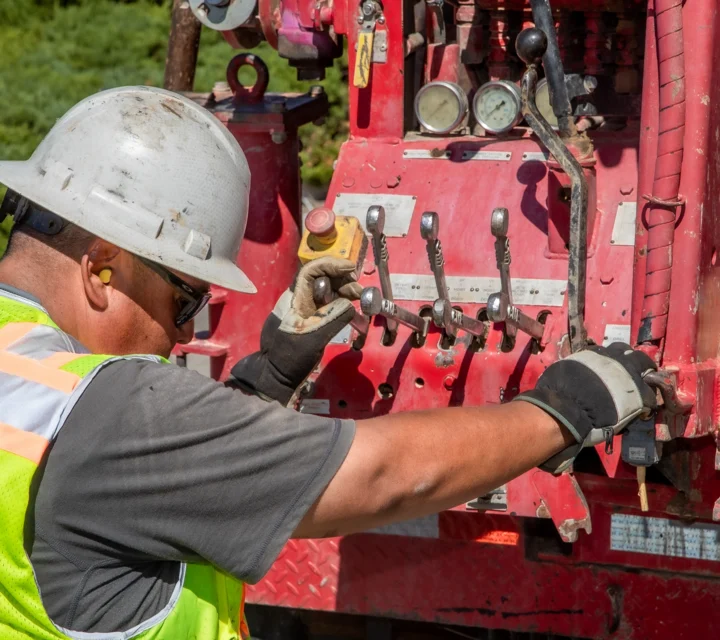
Core drilling uses a Wire Line Core System with retrievable inner barrel, often diamond or carbide-tipped, mounted on a drilling rig to cut a continuous core from subsurface materials. As the bit rotates and advances, it cuts around the perimeter of the borehole, capturing the sometimes-solid core inside the barrel for retrieval. Coring systems may use nested inner and outer barrels to protect core integrity, especially in unconsolidated materials. Fluids such as drilling mud or air are circulated to cool the bit and flush cuttings, balancing stability with sample preservation.
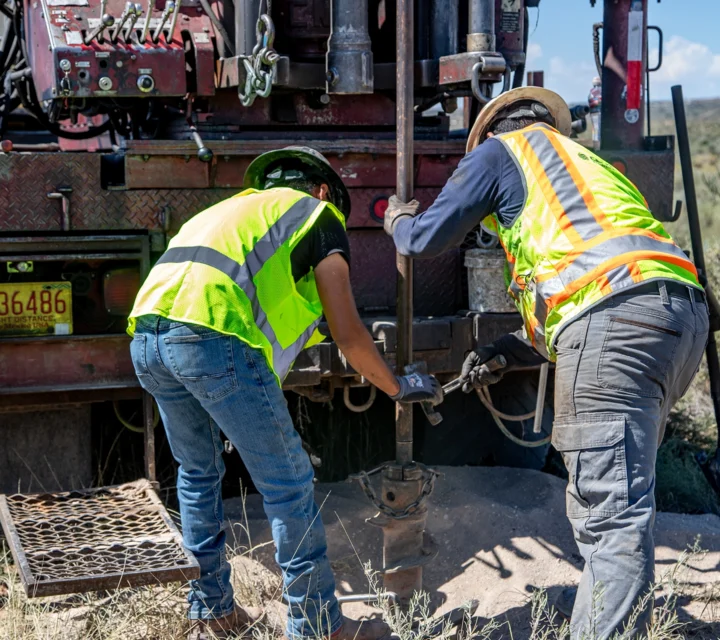
W/L core drilling is used when precise subsurface stratigraphic definition is required, including environmental characterization, geotechnical profiling, and mineral exploration. It provides samples for lithologic, structural, and contaminant analyses, and supports foundation design, fracture assessment, and other decisions where disturbed cuttings lack sufficient detail.
Understand how core drilling works, when it’s suitable, how core integrity is maintained, and key considerations for collecting continuous, undisturbed subsurface samples in investigations.
Core drilling’s primary purpose is to recover an intact cylindrical subsurface sample that preserves stratigraphy and material characteristics for detailed engineering, environmental, or geological analysis.
Coring uses a hollow bit and barrel to capture a solid core rather than pulverized cuttings, and nested barrel or wireline systems help protect the sample during removal.
Core drilling is selected when continuous, undisturbed data is essential—such as in geotechnical profiling or structural rock evaluation—where disturbed cuttings or grab samples are insufficient.
Common variations include soft coring for unconsolidated materials and hard coring for consolidated rock, as well as wireline coring for deeper holes and more efficient core recovery.
Core drilling allows direct recovery of continuous subsurface samples for detailed evaluation. Field-executed core drilling supports geologic characterization, material assessment, and clear documentation to inform planning and investigation efforts.
Loading...