
Certerra Subsurface Liner Leak Location – Pinpointing industrial pond liner leaks
News2 Mar 2026
Hollow Stem Auger (HSA) drilling techniques advance borings by rotating helical flights to cut and lift soil to the surface. In solid-stem or hollow-stem configurations, it’s commonly used for shallow-to-moderate depth borings in unconsolidated materials to support sampling and select installations.
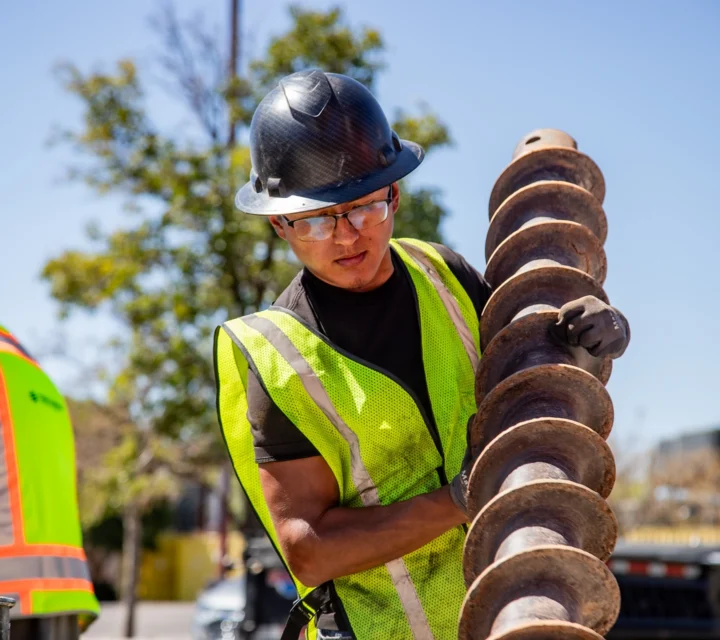
A rotating auger cuts and conveys soil upward along the flights. Solid-stem augers typically produce cuttings suitable for general soil identification and bulk sampling in shallow explorations. Hollow-stem augers can act as temporary casing while drilling, helping reduce borehole collapse and enabling sampling or device installation through the hollow stem without leaving an open hole unsupported. Auger methods generally avoid drilling fluids, but depth is limited and performance can degrade in cobbles, boulders, cemented soils, or rock.
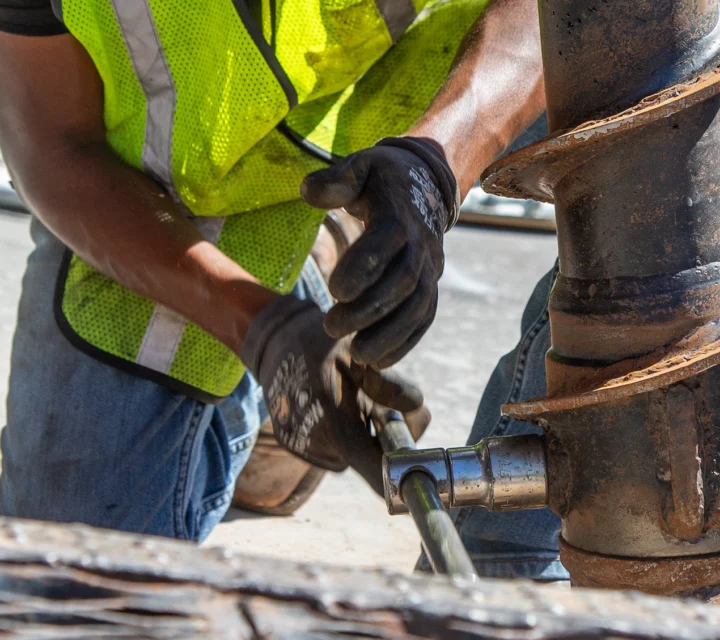
Auger drilling is commonly applied where shallow-to-moderate depth access is needed in unconsolidated soils, including soil exploration and sampling and (with hollow-stem systems) installation of subsurface monitoring devices. It is often selected when minimizing drilling fluids is important and when site access favors smaller rigs.
Learn more about our auger drilling applications, operational considerations, and factors that influence method selection for shallow subsurface access and investigation work.
Auger drilling is often a fit for unconsolidated soils where shallow-to-moderate depth access is needed for soil exploration or sampling, especially when drilling fluids are undesirable. Site conditions (e.g., cobbles, cemented layers) can limit effectiveness.
Solid-stem augers primarily bring cuttings to the surface for general logging and bulk sampling. Hollow-stem augers can function as temporary casing, allowing sampling or installation through the stem while helping manage caving in less stable soils.
Yes—hollow-stem auger systems are widely used for installing subsurface water-quality monitoring devices in unconsolidated materials, with guidance emphasizing borehole/stem sizing and placement considerations to support proper annular materials installation.
Auger methods can be depth-limited and are typically not suitable for rock or well-cemented formations; cobbles/boulders may slow or prevent advancement. Cuttings returned on flights are disturbed, so higher-quality sampling may require split-spoon or other sampling systems.
Auger drilling offers a practical approach for shallow subsurface access in soils and unconsolidated materials. Field-executed auger drilling supports investigation and sampling needs with clear documentation to inform planning and next steps.
Loading...