Certerra Subsurface Liner Leak Location – Pinpointing industrial pond liner leaks
News2 Mar 2026
Induced Polarization (IP) is a complementary geophysical method used alongside electrical resistivity to reveal subsurface zones influenced by geochemical reactions, ionic content, and mineralogical variability. IP highlights features associated with oxidation processes and impacted water, providing insight into internal behavior that traditional resistivity alone may not fully resolve.
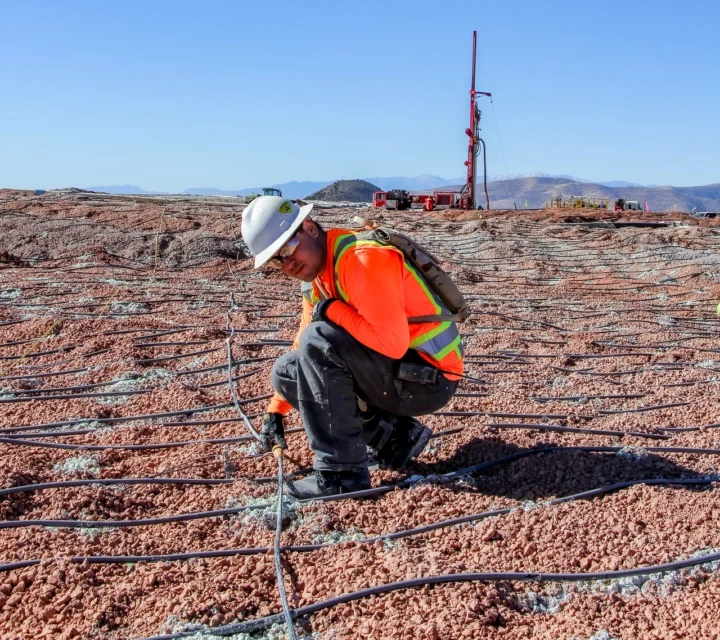
Induced Polarization measures how the subsurface temporarily stores electrical charge when a current is applied. When the current is turned off, certain materials release the stored charge more slowly. This delayed response—called chargeability—reflects differences in mineral composition, ionic content, pore-fluid behavior, and geochemical processes.
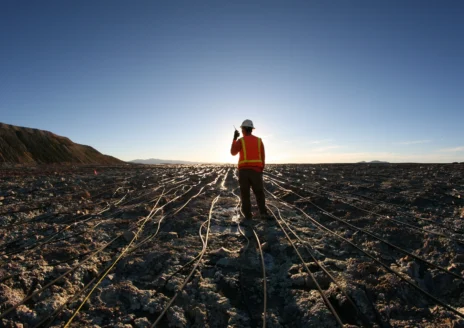
We collect IP data using electrode arrays similar to those used for electrical resistivity. While resistivity reveals contrasts in conductivity, IP highlights how materials polarize in response to electrical stimulation. Together, the two methods reveal a more complete picture of subsurface conditions.
IP is particularly sensitive to zones affected by mineral oxidation, elevated ionic concentrations, or geochemical alteration—features that are often associated with impacted water, reactive minerals, or evolving subsurface conditions.
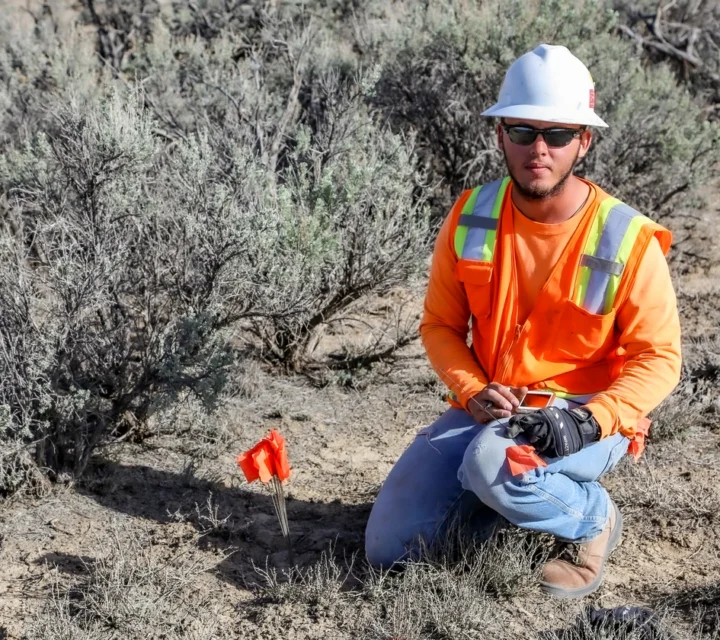
IP excels at highlighting zones influenced by oxidation of sulfidic minerals, elevated ionic concentrations, or reactions that contribute to acid rock drainage. These chargeability contrasts help clarify where impacted water may move or accumulate within complex materials.
IP is also effective for identifying internal variations within waste rock, tailings, or rock piles where geochemical processes and moisture distribution influence long-term performance. Because IP responds to subtle changes associated with mineral alteration and fluid chemistry, it complements resistivity by revealing features that conductivity alone cannot distinguish. Together with resistivity, IP provides a more complete understanding of subsurface hydrology, geochemical evolution, and structural variability.
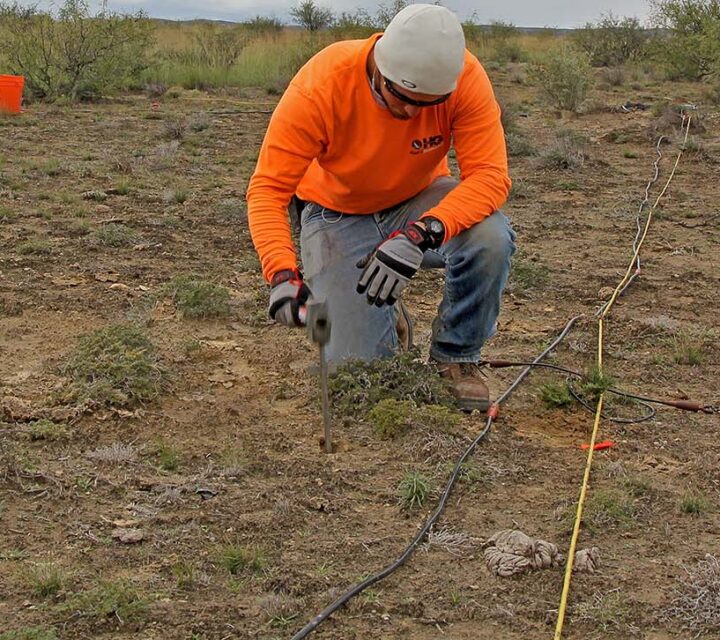
Induced Polarization provides insight into geochemical behavior and mineralogical processes that directly affect subsurface conditions. Operators gain clarity on zones where oxidation, ionic concentration, or altered materials influence hydrologic pathways and internal structure. This added layer of information enhances the interpretation of resistivity results and provides a fuller understanding of complex subsurface systems.
IP helps identify areas associated with impacted water movement, chemical alteration, and evolving geochemical reactions, factors that contribute to long-term performance and environmental management. When combined with resistivity, IP offers a powerful dual perspective: resistivity highlights structural and hydraulic contrasts, while IP reveals changes linked to chargeability and mineral processes. Together, they provide the actionable insight needed to guide decisions with greater confidence.
Learn how IP detects chargeability variations linked to oxidation, ionic content, and altered materials, offering insight that enhances subsurface interpretation and supports informed decisions.
Resistivity measures conductivity contrasts; IP measures chargeability responses. Together, they reveal structural, hydrologic, and geochemical conditions.
Depth depends on electrode layout and site conditions, similar to resistivity surveys.
Yes. It is well-suited for waste rock, tailings, and rock piles where geochemical reactions influence subsurface behavior.
IP provides additional insight where resistivity alone cannot distinguish geochemical or mineralogical variations.
Induced polarization helps distinguish subsurface materials that respond differently to electrical stimulation. Field-verified IP data supports characterization of material properties, reduces uncertainty, and guides planning where subsurface conditions are complex.
Loading...