
Certerra Subsurface Liner Leak Location – Pinpointing industrial pond liner leaks
News2 Mar 2026
Rock core sampling involves recovering intact cylindrical sections of rock during drilling activities. The method supports detailed subsurface characterization by preserving lithologic and structural features, with emphasis on controlled recovery, handling, and documentation appropriate to project requirements.
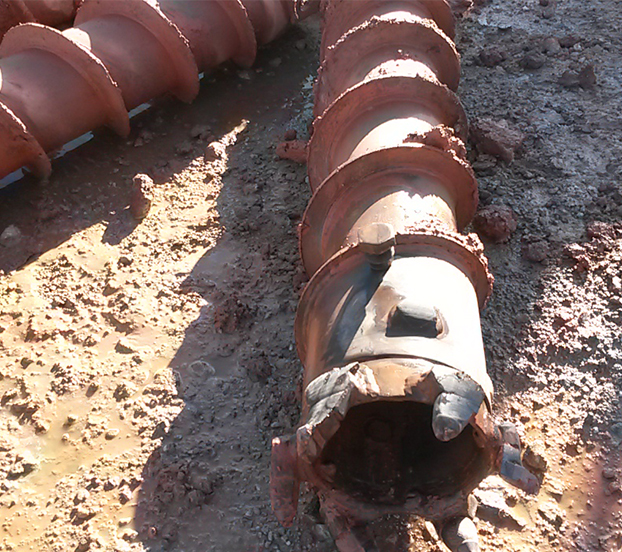
Rock core sampling uses hollow coring tools to cut and retrieve continuous sections of rock from the subsurface. As drilling advances, the core is captured within a barrel and periodically retrieved for logging and containment. Systems may include single, double, or wireline core barrels selected based on depth, formation competency, and recovery requirements. Handling procedures focus on preserving core orientation, continuity, and condition while minimizing breakage or loss. Rock core sampling activities are limited to physical recovery and field handling and do not include interpretation or engineering evaluation.
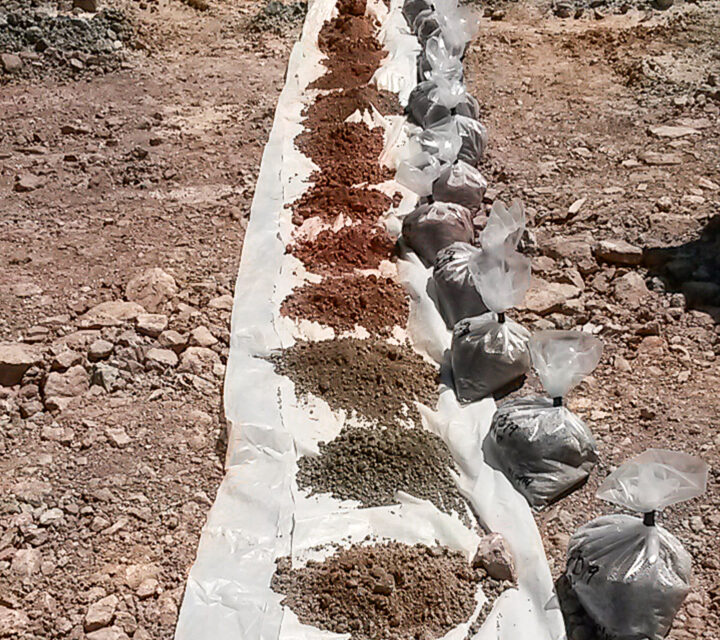
Rock core sampling is used in environmental and geotechnical investigations where detailed information on rock type, structure, and condition is required. Recovered cores provide material for laboratory testing and support characterization of bedrock conditions relevant to subsurface design and assessment.
Learn more about rock core sampling fundamentals, recovery approaches, and key considerations that influence core quality during drilling-based subsurface investigations.
Rock core sampling recovers intact rock material to support evaluation of lithology, structure, and condition as part of environmental and geotechnical investigations.
Rock core sampling retrieves continuous, intact sections of rock, while soil sampling typically collects disturbed or discrete soil materials that do not preserve structure in the same way.
Core quality is influenced by formation competence, drilling method, bit selection, barrel configuration, and handling procedures during retrieval and containment.
Integrity is maintained through careful handling, proper containment, labeling, and documentation to preserve continuity and condition before laboratory testing or further evaluation.
Rock core sampling delivers direct, continuous records of subsurface geology. Field-executed core sampling supports detailed material evaluation, structural understanding, and clear documentation to inform investigation, planning, and decision-making.
Loading...