

The Latest in Subsurface Investigations Seismic Surface Waves (MASW)
News2 Mar 2026
Solutions for a complex world: Pinpointing industrial pond liner leaks
Article by: Milan Calendine | Certerra Subsurface Imaging
An unfortunate but simple truth about industrial geosynthetic liners, including impermeable engineered geomembranes and HDPE sheets, is that most will eventually leak. This is not because of low-quality products, as North American geosynthetic companies produce some of the highest-grade liners in the world. Nor is it typically because of faulty installation methods, since installers follow strict procedures and third-party construction quality assurance (CQA) oversight programs are often required.
When quality products, proper installation procedures, and CQA programs are coupled with electrical leak location methods, the industry can achieve a very high level of confidence that newly installed liners will remain intact and function without leaking. Rather, leaks occur because all systems and products eventually become damaged or break down over time through use and exposure to complex industrial environments. When leaks happen while a system is in operation, one of the best, and sometimes only, ways to locate them is through electric leak location technology.
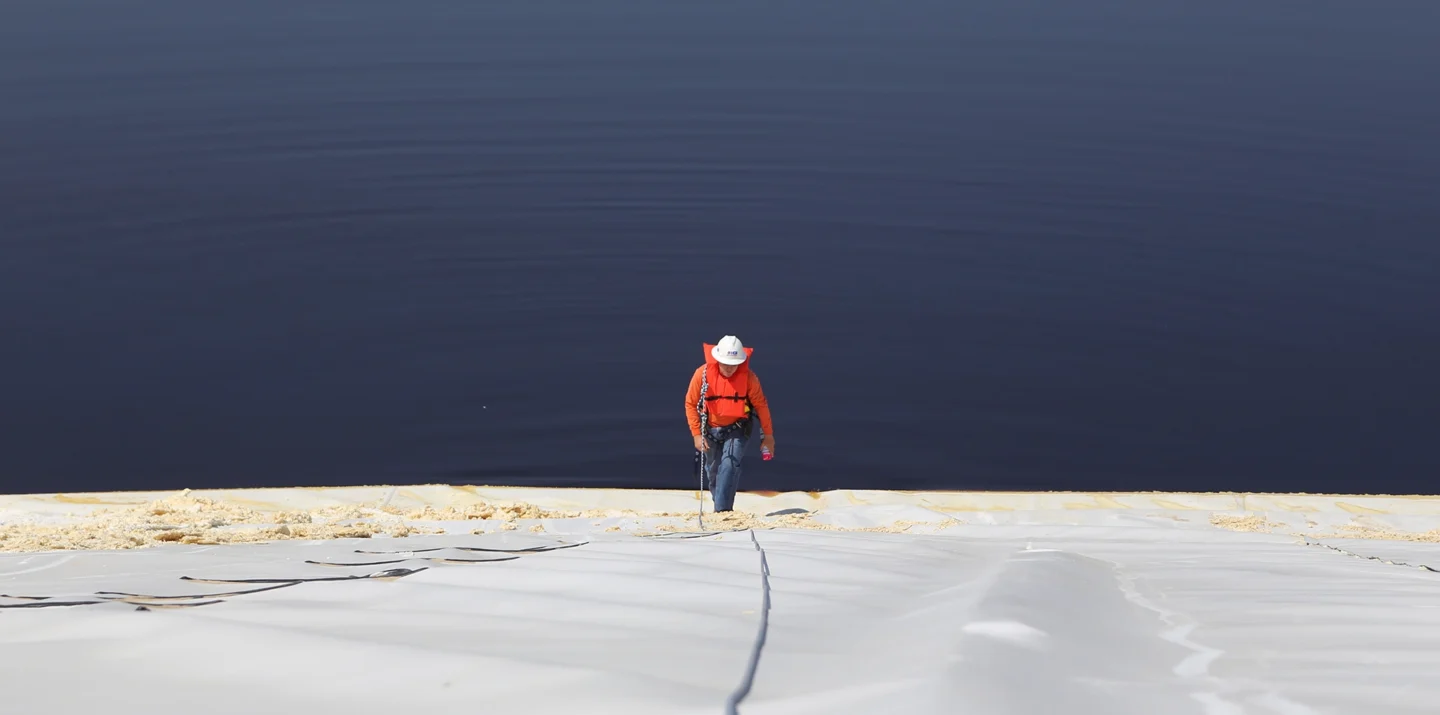
Pond liner leak detection, also known as a geoelectrical integrity survey, is one of the best ways to help ensure the integrity and long-term reliability of geosynthetic lined containment systems. The technology provides accurate, repeatable, and safe surveys in systems that are fully operational. HGI has more than 20 years of experience with electric leak location technology, developing unique and proprietary methodologies that have produced a success record unmatched in the industry.
The basic premise of geoelectrical integrity surveys is that electrical current will flow along the same pathways as water. Therefore, the distribution of injected current depends on the electrical properties of the geosynthetic liner, its substrate, and its cover material. Geomembranes are typically electrically resistive and act as sheet insulators, while substrates and cover materials, such as earth, water, or both, are comparatively conductive. If tears or holes exist in the liner, electrical current will flow through those openings, causing anomalous voltage readings. As a result, the electric current passing through a hole in the liner is both significant and measurable.
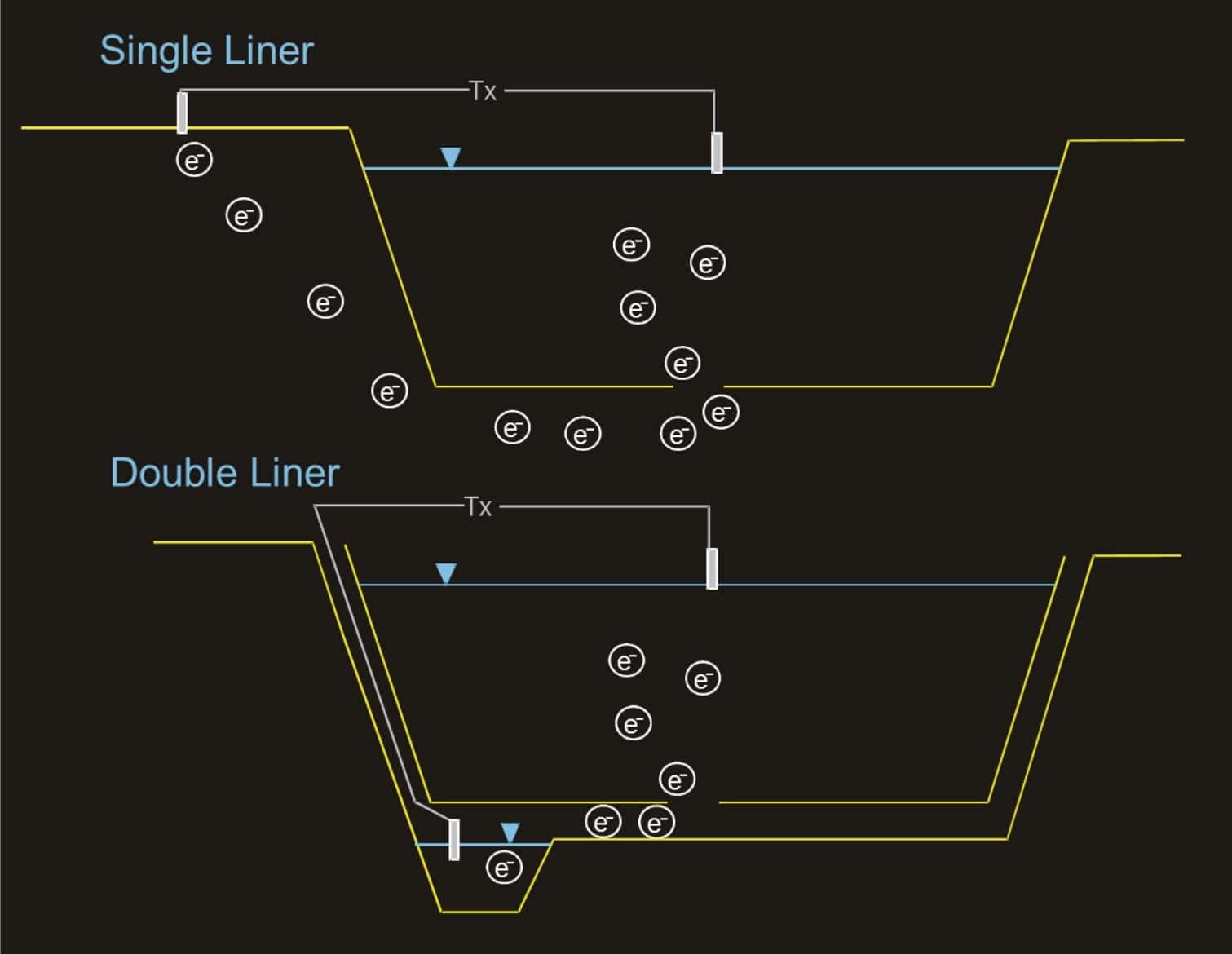
Certerra Subsurface Imaging’s unique and proprietary leak location approach condenses this technology into a single system in which functionality and data quality are continually monitored to ensure accurate and reliable results. Our enhanced acquisition methods, combined with equipment advancements such as sensor arrays large enough to accommodate very large ponds, the ability to deploy gear without personnel entering the pond, and the capability to survey ponds at full operating capacity, create advantages that no other system offers.
These methods reduce human error, improve system reliability, increase investigation surface area, and support surveyor safety, all while reducing costs. Our approach allows Certerra Subsurface Imaging to isolate exceedingly small leaks across acres of liner, archive and post-process the data, and present easy-to-understand maps highlighting anomalous readings associated with leaks. Surveys can also include a global positioning system (GPS) to precisely locate detected leaks.
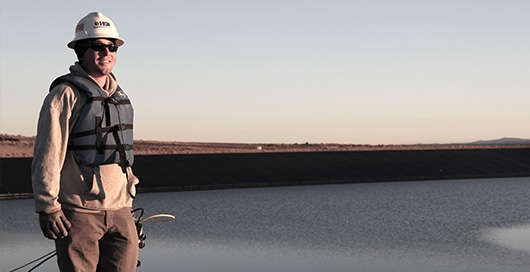
Certerra Subsurface Imaging specializes in industrial ponds and containment structures that hold highly conductive solutions, including processed mine wastewater, brine solution, and pregnant leach solution (PLS) from copper and gold mines, as well as reservoirs, stormwater catchments, canals, and agricultural process ponds. Because electrical liner leak location methods are rooted in electrically based geophysical techniques, they can also be adapted to detect leaks and seeps in subsurface pipes, tanks, geological environments, and large earthen structures such as dams, heap leach pads, and tailings piles.
Follow the link for more information on leak detection. If you have a project where leak detection could benefit you or your client, contact us. We are passionate about what we do and honest about the applications and limitations of geophysical technologies.
Loading...